Animals

Monday, 15 December 2025
19 facts about snails
Also called gastropods
Snails are mollusks and are one of the most numerous animal species in the world. In terms of species diversity, they are second only to insects. Even ...

Did you know?

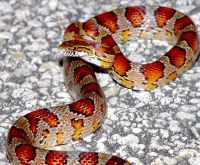
Corn snake
They lack eyelids.
They do have, however, a skin layer over their eyes to moisturize them. Once the layer is dry, a corn snake will shed it, just as it sheds its skin.
Earthworms
The functions of the brain in earthworms are performed by the periaesophageal ganglion, which in ringworms is divided into supraesophageal and subesophageal ganglia. These ganglia are interconnected and form the periaesophageal ring.
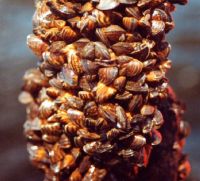
Zebra mussel
Following the mass introduction of zebra mussels in 1991 in Saginaw Bay of Lake Huron, changes were observed in the plant plankton communities and benthic fauna.
The amount of algae in the water body decreased by almost 60%, phosphorus concentration decreased by 42%, and water transparency increased significantly.
Javan leopard
It is listed as endangered by the IUCN Red List.
It faces a fragmentation of its habitat and agricultural expansion.
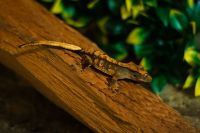
Crested gecko
They prefer humid environment.
Ideally, the humidity of their environment should not drop below 50% during the day, and 80% at night.
Pterodactyls
Pterodactyls had four fingers.
Their wings, made of skin and muscle membrane, stretched from the fourth elongated finger.
Llamas
Territorialism
Llamas willingly and courageously defend their territory against intruders. Alpacas prefer to move away and hide rather than face an open confrontation.
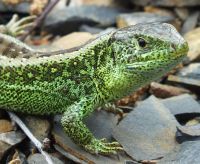
Sand lizard
The body length can be up to 24 cm (9,44 in). Individuals from Eastern Europe can reach up to 28 cm (11 in). They have a compact, stocky body.
Both the legs and the snout are short. The paws end with long, clawed toes. The tail, in turn, is almost half its length, about 11 cm (4,3 in).
Bull snake
Bull snakes are diurnal reptiles.
They use sunlight to warm their bodies so can be encountered while basking in the sun. With proper body temperature they are ready to seek for food.
Earthworms
Earthworms, depending on the species, can reach a length of 1 centimeter to 1 meter.