Plants

Monday, 15 December 2025
21 facts about olives
"Where the olive refuses to grow, there the Mediterranean world ends"
It is not known exactly when and where the first olive tree, characteristic of the Mediterranean region, grew. Paleobotanists claim that wild olives g ...

Did you know?

Pumpkin
A pumpkin is a creeping plant whose shoots can reach up to 12 meters.
The shoots are hairy and contain clinging whiskers. Leaves are large, heart-shaped, with hairy edges ...
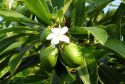
Cerbera odollam
Cerbera is an evergreen tree reaching up to 15 m in height.
It has gray cracked bark and the crown of the tree is rounded. The thirty centimeter long leaves are oblong-ovate, dark green, glossy with a distinctly pointed tip.
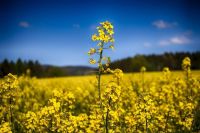
Rapeseed
It is a valuable source of fat-soluble vitamins, especially provitamin A, as well as vitamins K and E.
It also contains plant sterols and phytosterols which are one of the basic building blocks of plant ...
Carrot
The orange variety of this vegetable is owned to the Dutch, who created it in the 17th century.
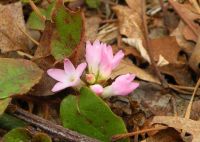
Mayflower
It was used by Native Americans as a medicine for treating numerous urinary problems.
It is due to a high concentration of the compound arbutin, a urinary antiseptic.
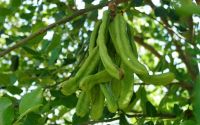
Carob
Carob meal is produced from the endosperm, which makes up 42-46% of the seed.
The endosperm is rich in galactomannans (polysaccharides), which make up 88% of its dry weight. Gala ...
Trees
Throughout the history of many of the world's religions and beliefs, we find references to trees.
In Norse mythology, Yggdrasil is the central cosmic tree, with roots and branches that reach across ...
Trees
The first angiosperm trees evolved during the Cretaceous period.
In the Tertiary, trees colonized almost all the land. Oaks, birches, cedars, maples, and lindens/bas ...
Stinging nettle
It has antioxidant properties, probably due to its high content of phenolic compounds.
Nettle extract causes an increase in the total number of antioxidants, which inhibit the formation of free radicals that cause cancer.
Broad beans
To prevent the eaten broad beans from causing flatulence, soak them in very hot water for an hour, then pour it out and cook the broad beans in fresh water.